
Why do breaker tie rods break?
Tie rods hold the breaker body sections together and carry load at every blow. A broken rod usually points to a tightening, maintenance or operating fault.
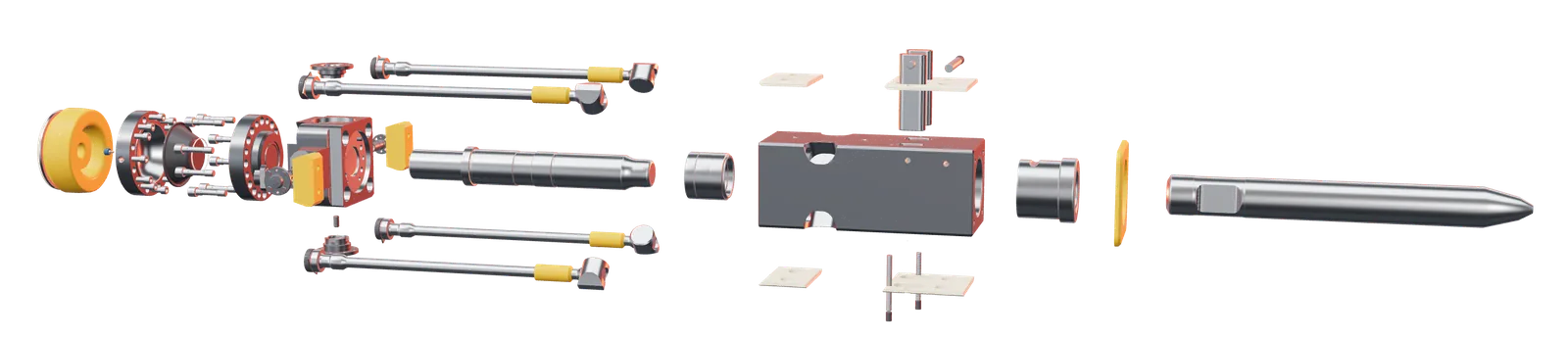
Wrong or uneven tightening
Tie-rod nuts are tightened by the method the breaker manufacturer’s manual gives. An under-tightened rod lets gaps open between the body sections and takes a shock load at every blow; an over-tightened rod is strained from the start. If the nuts are tightened unevenly, only some of the rods carry the load and the most loaded one breaks first. Before tightening, clean the threads and lubricate them and the nut seating faces with the lubricant the manual names, because dry, dirty or rusty threads give much less clamping at the same tightening value. Tighten the nuts in the order the manual gives, crosswise and in stages.
Loose nuts, damaged threads and washers
Impact and vibration can loosen the nuts over time; a loose rod soon fatigues and the others carry its load. On a new or rebuilt breaker the joints settle in the first working hours; check the tightness of the nuts at the first check the manual gives and then at the manual’s intervals. A missing washer, a worn seating face or crushed, rusty or burred threads keep the nut from seating fully and the rod from being tensioned correctly. Do not reuse a rod or nut with damaged threads.
Side loads: blank firing, prying, worn bushings and buffers
In blank firing the energy of the blow goes into the breaker body and the tie rods. Prying with the tool, pushing rock sideways with it, or working at an angle with a worn tool and bushings puts side loads on the body; the rods then carry bending as well as tension. Worn damping buffers and wear plates in the housing let the body hammer and rattle inside it; check them at service.
Wrong gas pressure, excess oil pressure and down force
If the back-head or accumulator gas pressure is too low or too high, or the accumulator diaphragm is torn, pressure peaks and vibration pass into the body. Working pressure or oil flow above the breaker’s rating, high return-line back pressure and pressing down so hard that the machine lifts on the breaker also add load to the rods at every blow. Have the gas pressure checked at the intervals the manual gives, and keep pressure and oil flow to the manual’s values.
Fatigue and a rod that does not match the breaker
A tie rod is stretched a little and released at every blow. This repeated load opens small cracks over time; a break usually starts at the root of a thread or where the rod’s section changes, and comes without warning. A rod whose length, diameter, thread and material were not made for that breaker, even one of similar size, cannot be tightened correctly or does not stand up to impact.
Signs and checks
Gaps or play between the body sections, oil seeping at the joints, unusual knocking or rattling and loose nuts show a problem with the tie rods. Look at tool and bushing wear too; the side load on the rods often comes from there. If a rod has broken, do not run the breaker; the load moves to the other rods and they can break too.
Replacing tie rods is workshop work
On most breakers the back head, and on some the accumulator too, holds nitrogen gas under pressure. Tie rods are not loosened or removed, and the body is not taken apart, until the gas has been let out with the charging kit the manual names and the breaker has been laid flat and supported; otherwise the back head can be thrown off and cause serious injury. Replacing tie rods and tightening them to full value is workshop work; on the machine, the operator only checks nut tightness as the manual says. When one rod breaks, the others have carried its load too; they may be stretched or have fine cracks you cannot see. So tie rods are usually replaced as a set, with their nuts and washers; follow what the manual says. Search your breaker’s make and model on the tie rod page to find the rods that fit it.
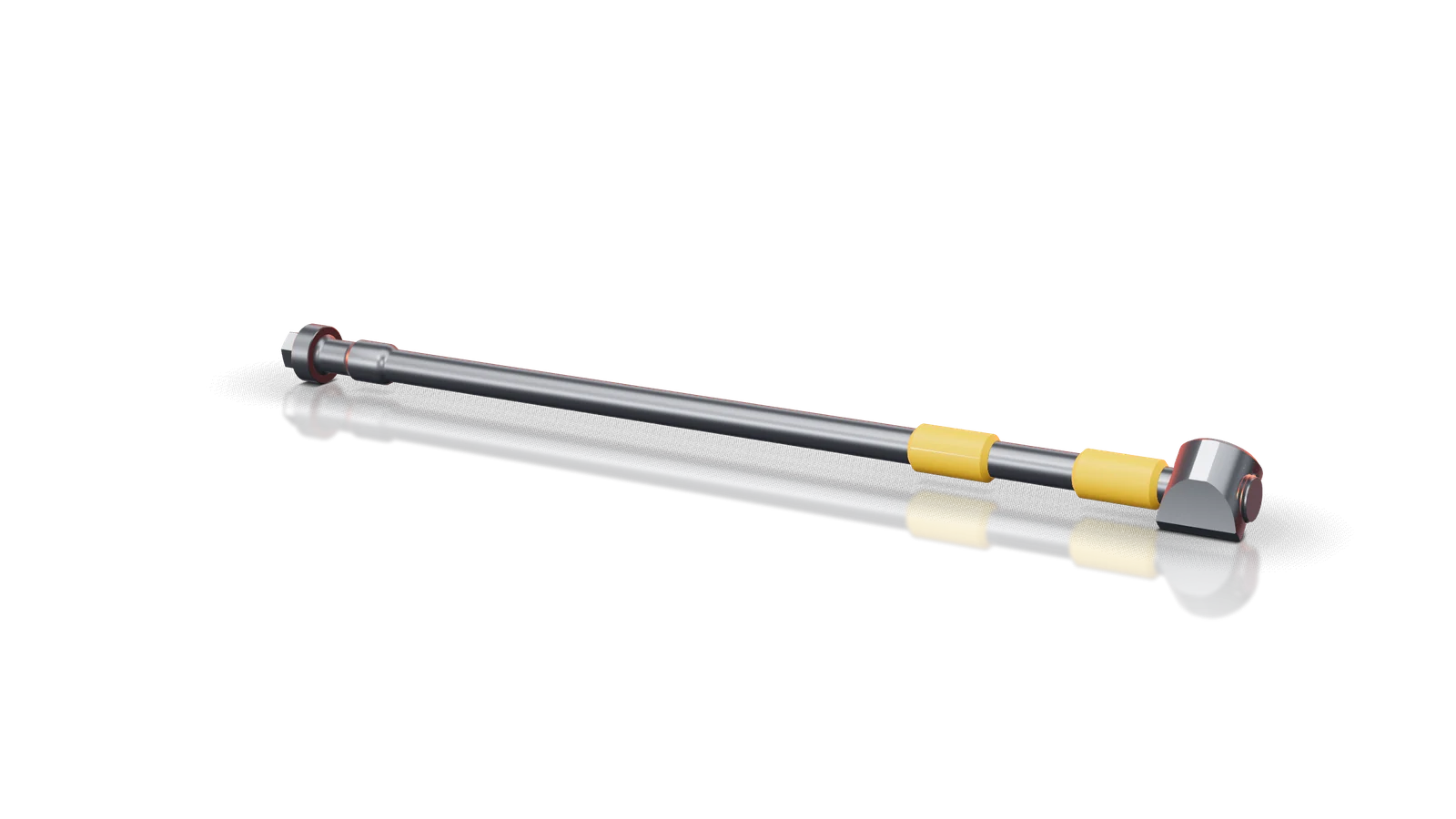
Video walkthrough
The voice-over is synthetic. Watch on YouTube (opens in a new tab)
Transcript
Why do breaker tie rods break?
Crosswise, in stages. Tighten the nuts in the order the manual gives, crosswise and in stages.
Uneven tightening. If the nuts are tightened unevenly, only some of the rods carry the load and the most loaded one breaks first.
A loose nut. Impact and vibration can loosen the nuts over time; a loose rod soon fatigues and the others carry its load.
Side load. Prying with the tool puts side loads on the body; the rods then carry bending as well as tension.
A fatigue crack. A break usually starts at the root of a thread or where the rod’s section changes, and comes without warning.